AI Agents
How AI Agents Are Changing Businesses
By M. Anas Qurban · 7 September 2026 · 6 min read
Updated 10 September 2026
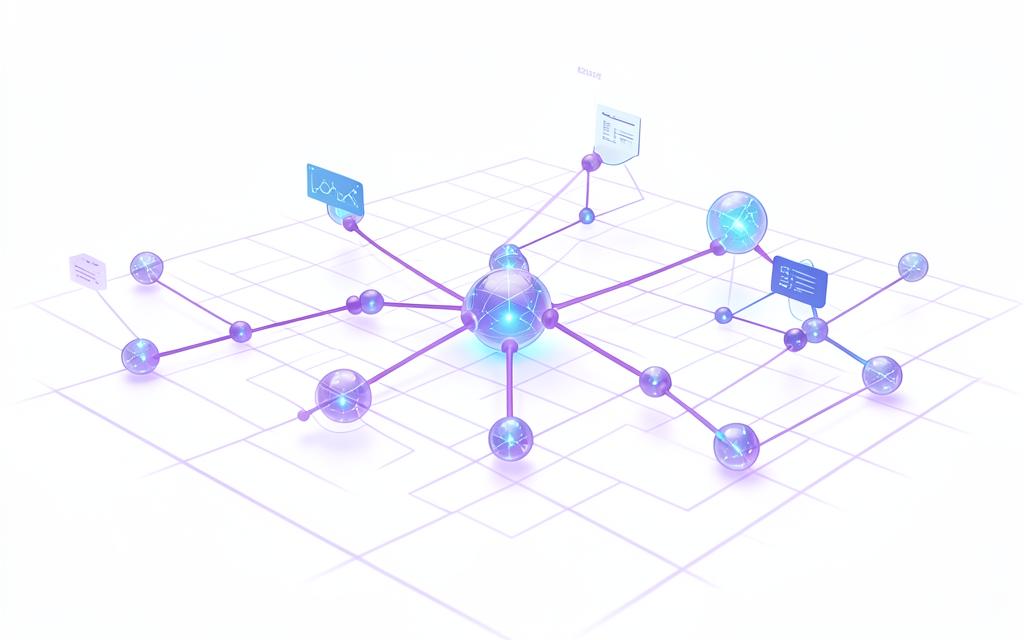
How AI agents differ from chatbots, where they already help businesses, why they fail and a safe staged plan for introducing one into your workflow.
What an AI agent is, in plain terms
A chatbot answers. An AI agent acts. An agent is given a goal, a set of tools it may use, and rules about scope, then it works through steps to reach the goal: reading a message, looking up a record, drafting a reply, creating a task, sending a confirmation.
The difference matters for businesses because an agent can complete a workflow rather than only produce text.
Where agents are already useful
- Enquiry handling. Reading incoming messages, extracting details, creating a lead record and replying with the correct information.
- Order and booking flows. Collecting requirements step by step, confirming them and creating the record.
- Follow up. Identifying quiet conversations and drafting a polite next message.
- Internal research. Searching company documents and returning a short answer with sources.
- Reporting. Gathering weekly numbers and writing a readable summary.
- Voice calls. Calling agents that confirm appointments or answer routine questions.
Why agents fail in practice
Most failures are design failures, not model failures.
- Scope too wide. An agent asked to handle everything handles nothing reliably. Narrow the goal.
- No verification. If the agent can act without a check, its mistakes reach customers.
- Missing facts. Without your prices, policies and hours in a source it can read, the agent guesses.
- No escalation. Every agent needs a clear route to a person, on request and on uncertainty.
- No logs. Without a record of steps and outcomes you cannot improve or explain what happened.
The safe way to introduce an agent
1. Choose one workflow with clear inputs and a clear finished state.
2. Write the approved facts and the rules the agent must follow.
3. Let it draft only, with a person approving every action for the first weeks.
4. Log every run and read the failures.
5. Give it permission to act only on the steps that have proven reliable.
6. Keep a manual fallback for when it is unavailable.
This staged approach costs little and prevents the reputational damage that comes from an unsupervised assistant making promises the business cannot keep.
What changes for the people involved
Agents move staff from doing repeated steps to reviewing, deciding and handling exceptions. That is a real change to a role, so it needs explaining. Teams that are told what the agent does, what it must not do and how to override it adopt it far more successfully than teams that discover it by surprise.
Building this yourself
Designing agents needs prompt engineering, an understanding of tools and APIs, data handling and a habit of building in checks. Those are taught together in the AI in Hands program at Smart AI Institute in Okara, where chatbots and AI agents, AI calling agents, WhatsApp AI automation and business automation are separate project based modules.
For the full curriculum, schedule and fee, read the AI course in Okara guide, or see what practical teaching should include in the AI academy guide. Questions about the next batch are welcome through our contact page.
- AI Agents
- Automation
- Business
Frequently Asked Questions
What is the difference between a chatbot and an AI agent?
A chatbot mainly replies with text. An agent is given a goal and tools, and can complete steps such as looking up records, creating tasks and sending confirmations.
Are AI agents safe to let loose on customers?
Not without limits. Start in draft only mode with human approval, add logs and escalation, and grant permission to act only on proven steps.
What do agents need to work well?
A narrow goal, access to your approved facts, defined tools, verification steps, escalation to a person and logs of every run.
Can I learn to build AI agents in Okara?
Yes. Chatbots and AI agents, plus AI calling agents, are modules in the AI in Hands program at Smart AI Institute, a four week weekend course.
Want to learn practical AI in Okara?
Explore the AI in Hands 1-Month Intensive at Smart AI Institute and learn AI by building real projects on weekends.